





A Big Bang Musing · 18 April 2026
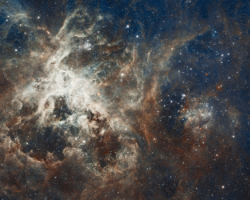
I have listened to a few books on reconciling theology and science, and have come to the conclusion that there is something few if anybody has considered when thinking about the age of the universe. The speed of the expansion of the universe.
I am no cosmologist (a scientist who studies the origin and development of the universe, according to the internet). Nor am I a professional theologian (somebody who studies God professionally). But I like thinking about science and theology from a lay person’s perspective. Which means that I like to read and listen to books about science, theology, and a whole bunch of other topics relating to both.
Lately, I have been listening to a book that tries to defuse the notion that science and theology are at odds. People can be scientists and believe in God. More importantly, people can be scientists and believe in the God of the Hebrew and Christian Bible.
The interesting thing that has come up in the latest book I am listening to (The Comprehensive Guide to Science and Faith: Exploring the Ultimate Questions about Life and the Cosmos) is the age of the earth. I must say that I go back and forth between whether I believe God created the universe in 6 sequential days or over millions or billions of years. I have even thought that the notion that there was time between days of creation could be true as well. The jury is still out in my mind. But there is something that one of the essays in the book I am listening to seems to miss.
When discussing the age of the universe, the author makes clear that Christ followers can be in either the old earth or young earth camp without being heretics. In Christian-ese, the age of the earth is not a salvation issue. A point which I wholeheartedly agree with. He also gives several assumptions that must follow for both science and theology to make sense. One of those assumptions is that the light from the bodies of the universe starts at those bodies. Or something like that. I do not exactly recall what the statement was, but to me the author was merely saying that those bodies in the cosmos that emit light had to start emitting light when they came into being. Which means that the light had to have traveled the distance of the cosmos to reach the observers (on earth). Which make sense.
Another assumption that the author stated was that the speed of light has remained constant during the time of the universe’s existence. Which also makes sense.
The conclusion that the author makes is that the universe must then be billions of years old for light to have traveled billions of light years to reach our eyes from the stars’ current locations. Which makes sense as well. Mostly.
The interesting thing that I have not heard or read is that even if the speed of light has been the same from the beginning of the universe and even if the light emitted from the bodies of the cosmos that emit light started when they were created, the universe and the earth could still be younger than we think if the universe expanded faster than the speed of light when the universe was created.
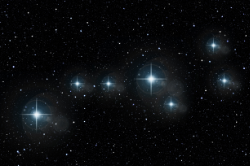
Like I already said, I am no cosmologist. I do not know enough math to come up with equations to think about how it would all work, but might it be possible that the universe expanded at much greater than the speed of light when it was created? The Big Bang must have been like any explosion, right? Which means that there would have been a huge acceleration at the bang. And even as the bodies of the universe were being created and flung far and wide, they were emitting light and heat as they went. And even though the speed of light and other universal constants and laws were followed inside the envelope of the universe, is it not possible that the universe itself expanded much faster than the speed of light? And if that was so, would those light beams not be left behind as the universe expanded? I know. Light is not really a beam. It actually behaves like both a wave and a particle, depending (which is a completely different story). Still, I think of it as if actual beams were left behind in the wake of the expanding universe.
I figure that somebody has probably thought of this before, but I have never heard it discussed, so I thought I would throw it out there. I know. I am no scientist. I am not a great thinker. And I am certainly no theologian. But God made our universe rational and we can figure many things out with the brains He has given us. So I am sure there are people who could figure out the math of a universe that expands faster than the speed of light at its beginning. It will just not be me. Probably.
I love to read and listen to books on science and theology and apologetics and all sorts of other topics. They all help me to remember that science and theology are not at odds. Even if it seems so at times. (Like when we are discussing the age of the universe.) Indeed, all science should point us to God. After all, He invented all the rules that science seeks to find. And to me, that makes all the difference in the universe. Regardless of how fast the universe expanced at the Big Bang.
© 2026 Michael T. Miyoshi
| Share on facebook | Tweet |

|

Comment
Commenting is closed for this article.
| The Second Most Important Holiday | Choices |